Modern manufacturing relies heavily on precision, consistency, and efficiency. One of the technologies that has transformed industrial production is the CNC Machine. CNC, or Computer Numerical Control, enables automated control of machining tools through computer-programmed instructions.
From aerospace and automotive manufacturing to electronics and medical device production, CNC machines play a crucial role in producing high-quality components with exceptional accuracy.
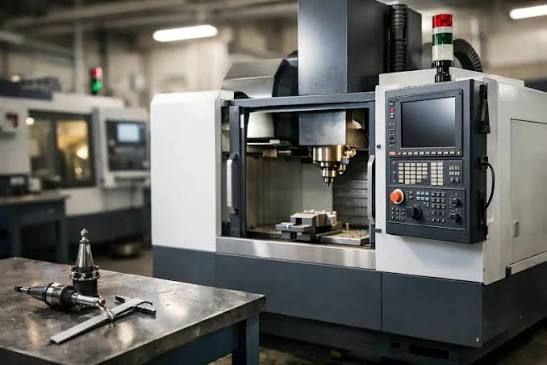
As industries continue to adopt automation and digital manufacturing technologies, CNC machines have become a cornerstone of precision engineering. Understanding how these systems operate and where they are used can help manufacturers, engineers, students, and industry professionals appreciate their importance in modern production environments.
Note: CNC machine specifications, capabilities, software platforms, and applications vary by manufacturer, machine type, and industrial requirement. This article is intended for educational purposes only.
What Are CNC Machines?
CNC Machines are automated manufacturing systems that use computer-controlled instructions to operate machine tools. These machines perform machining operations with high precision and repeatability by following programmed commands.
CNC technology can be used for:
Cutting materials
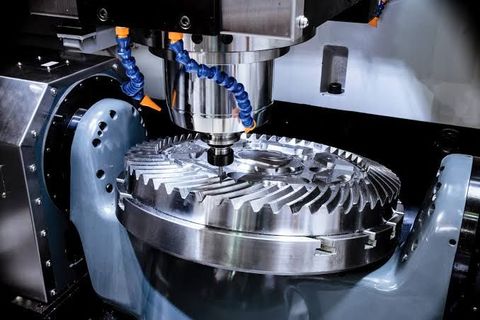
Milling operations
Drilling holes
Turning components
Grinding surfaces
Engraving designs
Shaping parts
Precision manufacturing
The exact functions depend on the machine configuration and tooling system.
How CNC Machines Work
CNC systems rely on digital instructions to control machine movement and operations.
Design Creation
Engineers create a digital design using computer-aided design (CAD) software.
Program Development
The design is converted into machine instructions using computer-aided manufacturing (CAM) software.
Machine Setup
Operators prepare materials, tools, and machine settings.
Automated Machining
The CNC machine follows programmed instructions to perform manufacturing operations.
Quality Verification
Finished components are inspected to ensure dimensional accuracy and quality standards.
This workflow enables efficient and repeatable production.
Why CNC Machines Matter
Manufacturers use CNC systems to improve production performance and precision.
Potential benefits include:
High manufacturing accuracy
Consistent product quality
Increased production efficiency
Reduced manual intervention
Improved repeatability
Support for complex geometries
Better material utilization
Enhanced process control
Actual results depend on programming quality, machine condition, and operational practices.
Common Types of CNC Machines
Several machine categories are widely used across industries.
CNC Milling Machines
Used to remove material from a workpiece using rotating cutting tools.
CNC Lathes
Designed for turning operations where the workpiece rotates during machining.
CNC Laser Machines
Utilize laser technology for cutting, engraving, and material processing.
CNC Plasma Cutters
Often used for cutting conductive metals with high-speed precision.
CNC Routers
Commonly used for wood, plastic, composite materials, and signage applications.
CNC Grinding Machines
Used to achieve precise surface finishes and dimensional accuracy.
Each machine type serves specific manufacturing requirements.
Industries That Use CNC Machines
CNC technology supports a wide range of industrial sectors.
Aerospace
Manufactures precision components with strict quality requirements.
Automotive
Produces engine parts, transmission components, and structural elements.
Medical Devices
Supports the production of surgical instruments and medical equipment components.
Electronics
Helps manufacture precision housings and electronic assemblies.
Industrial Equipment
Produces machinery parts and specialized components.
Energy Sector
Supports manufacturing for power generation and infrastructure systems.
These industries depend on precision and repeatability.
CNC Machines and Automation
Automation is one of the key advantages of CNC technology.
Modern systems may include:
Automated tool changes
Robotic material handling
Real-time monitoring
Smart manufacturing integration
Digital production tracking
Predictive maintenance systems
Remote diagnostics
Production analytics
These capabilities support efficient manufacturing operations.
CNC Machine Overview
| Machine Type | Primary Function |
|---|---|
| CNC Milling Machine | Material removal and shaping |
| CNC Lathe | Turning and rotational machining |
| CNC Laser Machine | Precision cutting and engraving |
| CNC Plasma Cutter | Metal cutting operations |
| CNC Router | Machining wood and composites |
| CNC Grinder | Surface finishing and accuracy improvement |
Factors to Consider When Evaluating CNC Machines
Organizations often assess several factors before selecting equipment.
Important considerations include:
Production requirements
Material compatibility
Precision requirements
Machine capacity
Software integration
Maintenance needs
Automation capabilities
Operator training requirements
Equipment selection should align with operational goals and manufacturing demands.
Current Trends in CNC Manufacturing
Manufacturing technology continues to evolve rapidly.
Recent developments include:
Artificial intelligence-assisted machining
Industry 4.0 integration
Smart factory connectivity
Advanced simulation software
Digital twin technology
Predictive maintenance systems
Automated inspection technologies
Cloud-based manufacturing analytics
These innovations help improve productivity and operational efficiency.
Looking Ahead
The future of CNC Machines is expected to include greater automation, enhanced machine intelligence, deeper integration with digital manufacturing systems, and improved sustainability through optimized resource utilization. As industries continue to adopt smart manufacturing practices, CNC technology will remain a foundational component of precision engineering and production.
Why Understanding CNC Machines Matters
Understanding CNC Machines helps manufacturers, engineers, students, and industry professionals appreciate the technologies driving modern production systems. Knowledge of CNC capabilities can support informed decisions related to manufacturing processes, equipment investments, and operational improvements.
Conclusion
CNC Machines have transformed modern manufacturing by providing precise, automated, and highly repeatable machining capabilities. From aerospace and automotive production to medical device manufacturing and industrial equipment fabrication, CNC technology supports countless applications across global industries. As automation and digital manufacturing continue to advance, CNC machines will remain essential tools for achieving efficiency, accuracy, and innovation in precision engineering.