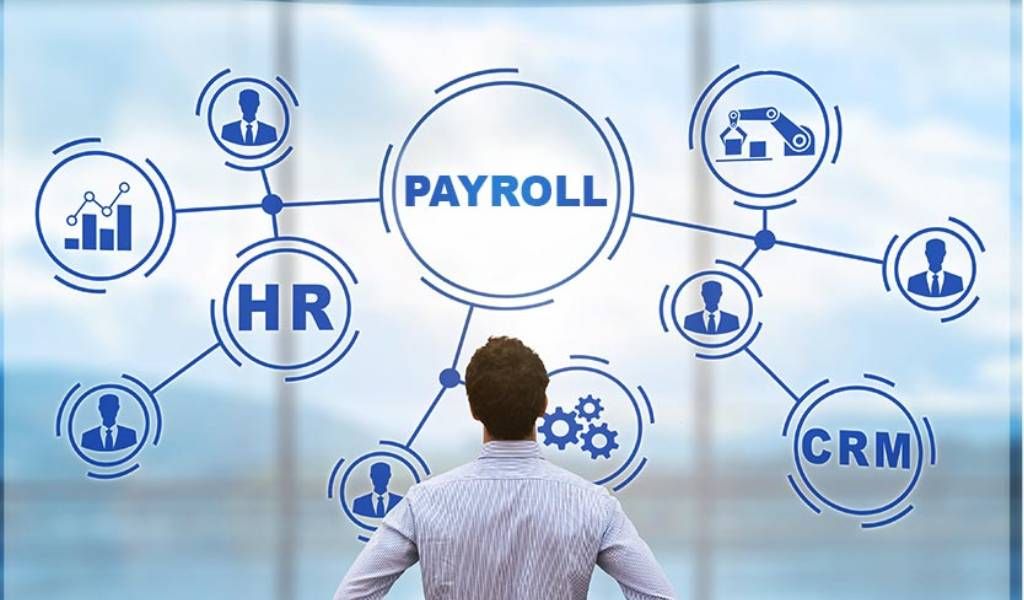
HR payroll management systems are digital platforms designed to manage employee data, salary processing, attendance, and compliance within an organization. These systems combine human resource management and payroll functions into a single framework, allowing businesses to handle employee-related operations efficiently and accurately.
The purpose of HR payroll management systems is to reduce manual work, minimize errors, and ensure that employee records and salary calculations are handled in a structured and reliable manner. As organizations grow, managing employee data and payroll manually becomes complex, making automated systems essential.
These systems are widely used across industries to support administrative tasks, improve transparency, and maintain consistency in employee management processes. By integrating payroll with HR functions, organizations can create a unified and efficient workflow.
Context
The evolution of HR payroll management systems reflects the broader shift from manual processes to digital solutions. Earlier, organizations relied on spreadsheets and paper-based records, which were time-consuming and prone to errors. Modern systems now provide automated and centralized platforms for managing employee information.
An HR payroll management system typically includes:
Employee data management, which stores personal and professional details
Attendance tracking, which records working hours and leave
Payroll processing, which calculates salaries and deductions
Reporting tools, which generate insights and summaries
Compliance features, which ensure adherence to regulations
These components work together to streamline HR and payroll operations.
A simplified structure of an HR payroll system is shown below:
| Component | Description |
|---|---|
| Employee Database | Stores employee information |
| Attendance Module | Tracks work hours and leave |
| Payroll Engine | Calculates salaries and deductions |
| Reporting System | Generates reports and analytics |
| Compliance Module | Ensures regulatory adherence |
This structure supports organized and efficient management of employee-related tasks.
Importance
HR payroll management systems are important because they improve accuracy, efficiency, and transparency in managing employee data and compensation. In modern organizations, accurate payroll processing is essential for maintaining trust and operational stability.
One of the key benefits is error reduction. Automated calculations minimize the risk of mistakes in salary processing and record-keeping.
Other important advantages include:
Streamlined HR and payroll processes
Improved data accuracy and consistency
Faster processing of employee information
Enhanced transparency in salary and records
Better decision-making through data insights
These systems also address challenges such as manual errors, delayed processing, and fragmented data management.
The impact across different organizational roles can be summarized below:
| Role | Benefit |
|---|---|
| HR Teams | Efficient management of employee data |
| Employees | Accurate and timely salary processing |
| Management | Better insights into workforce performance |
| Administrators | Simplified compliance and reporting |
By improving these areas, HR payroll systems contribute to smoother organizational operations.
Recent Updates
HR payroll management systems have advanced significantly in recent times, driven by digital transformation and evolving workplace needs.
One major trend is the integration of artificial intelligence and automation. These technologies help automate repetitive tasks, analyze workforce data, and improve decision-making.
Another development is the adoption of cloud-based platforms. These systems allow organizations to access data from anywhere, supporting remote and hybrid work environments.
Mobile accessibility has also improved, enabling employees and managers to access payroll and HR information through mobile applications.
Recent updates observed include:
Increased use of AI for payroll automation and analytics (2025–2026)
Adoption of cloud-based HR payroll systems
Expansion of mobile-friendly platforms for employee access
Integration with other business systems such as accounting and project management
Enhanced data security and privacy features
These updates reflect a shift toward more flexible and intelligent HR systems.
Laws or Policies
HR payroll management systems are influenced by laws and policies related to labor regulations, taxation, and data protection. These regulations ensure that employee information is handled responsibly and that payroll processes are compliant.
Key policy areas include:
Labor laws governing wages and working conditions
Tax regulations for salary and deductions
Data protection laws for employee information
Compliance requirements for record-keeping and reporting
Organizations must ensure that their HR payroll systems align with these regulations to avoid legal issues and maintain transparency.
The relationship between policies and HR payroll systems can be summarized below:
| Policy Area | Impact on HR Payroll Systems |
|---|---|
| Labor Laws | Define salary and employment conditions |
| Tax Regulations | Guide payroll calculations and reporting |
| Data Privacy | Protect employee information |
| Compliance | Ensures adherence to legal requirements |
Understanding these policies helps organizations manage employee data responsibly.
Tools and Resources
There are various tools and resources available to support HR payroll management. These tools help automate processes, improve accuracy, and provide insights into workforce management.
Common categories of tools include:
HR payroll software platforms
Attendance and time-tracking systems
Reporting and analytics tools
Compliance management solutions
Employee self-service portals
Examples of widely used tools include:
SAP SuccessFactors for integrated HR management
ADP Workforce Now for payroll and HR processes
Zoho People for employee management and tracking
QuickBooks Payroll for payroll processing
BambooHR for HR data management
Supporting resources include:
Online training programs for HR professionals
Government portals for labor and tax guidelines
Documentation and user guides for software platforms
Community forums for knowledge sharing
Templates for payroll and HR documentation
A comparison of key tools is shown below:
| Tool | Key Feature | Use Case |
|---|---|---|
| SAP SuccessFactors | Comprehensive HR management | Enterprise workforce management |
| ADP Workforce Now | Payroll and compliance | Payroll processing |
| Zoho People | Employee tracking | HR operations |
| QuickBooks Payroll | Payroll automation | Salary management |
| BambooHR | Employee data organization | HR record management |
Using these tools helps organizations maintain efficient and accurate HR processes.
FAQs
What is an HR payroll management system
It is a digital system that manages employee data, attendance, and salary processing within an organization.
How does it improve accuracy
It automates calculations and record-keeping, reducing the chances of manual errors.
Who uses HR payroll systems
They are used by HR teams, administrators, and management in organizations of all sizes.
Can employees access their payroll information
Yes, many systems provide self-service portals for employees to view their data.
Is compliance important in payroll management
Yes, compliance ensures that payroll processes follow legal and regulatory requirements.
Final Thoughts
HR payroll management systems play a crucial role in modern organizations by improving accuracy, efficiency, and transparency in employee management. By integrating HR and payroll functions, these systems simplify complex processes and support better decision-making.
As technology continues to evolve, HR payroll systems are becoming more advanced, offering features such as automation, cloud access, and data analytics. These developments help organizations adapt to changing workplace environments and improve overall performance.
Understanding how HR payroll management systems work allows businesses to manage their workforce more effectively, ensure compliance, and maintain reliable operations. As organizations grow, these systems will remain essential for efficient and structured employee management.